Jump to section
An always-on revenue machine is not a set-and-forget tool — it is a living system that learns, adapts, and improves with every campaign cycle.
System Architecture
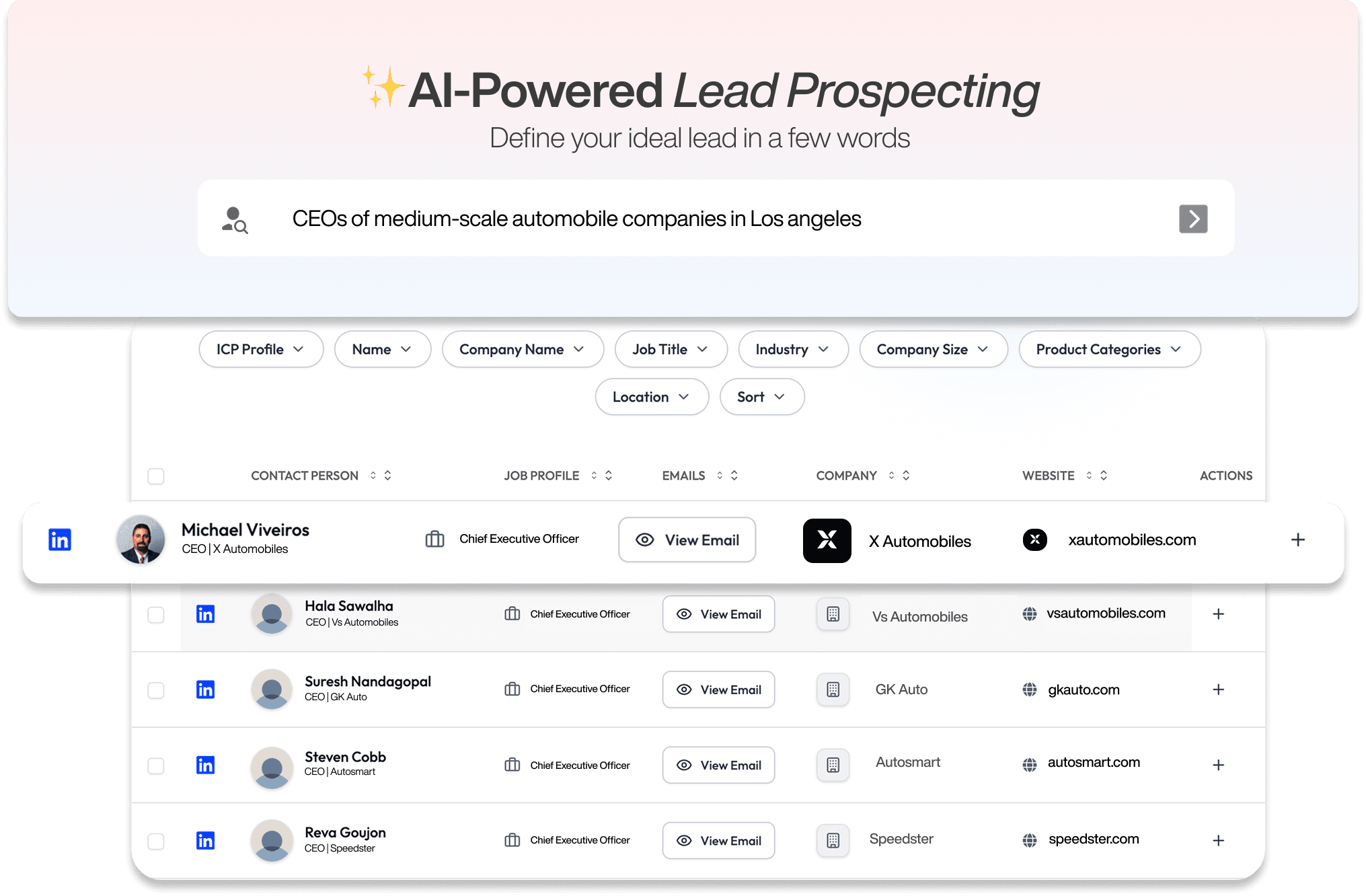
The core components are: an ICP definition, a data enrichment layer, a personalisation engine, a multi-channel sequencer, and a feedback loop that feeds results back into targeting.
Compounding Returns
- ◆Month 1: establish baseline — data quality, reply rates, meeting rates.
- ◆Month 3: A/B test messaging frameworks — identify top performers.
- ◆Month 6: feed reply data back into ICP scoring — tighten targeting.
- ◆Month 12: pipeline contribution from outbound is largely self-optimising.
Companies that systematically iterate on their outbound playbook see 60–80% improvement in reply rates within six months.
Getting Started
Start with one channel, one ICP segment, and one message sequence. Prove the model works, then expand horizontally across channels and vertically across segments.
Frequently Asked Questions
How long before I see results?
Most teams see qualified meetings in the first two weeks. Compounding effects take 3–6 months of consistent iteration.
Do I need a large team to run this?
No. Orbit is designed for lean teams. One operator can manage multiple agents across all channels.